Road Users Have Already Begun Scamming Delhi's Barrierless Tolling System


The barrierless toll plaza at the Mundka-Bakkarwala stretch on Delhi's Urban Extension Road II has been operational for barely any time, and drivers are already finding ways to dodge the charges. The National Highways Authority of India has publicly acknowledged the problem, confirming that misuse of the system is happening and that enforcement gaps need to be fixed urgently.

The barrierless or Multi-Lane Free Flow system works without boom barriers. Instead, overhead cameras using AI-powered Automatic Number Plate Recognition technology scan every passing vehicle, match it to a FASTag-linked account and deduct the toll automatically. The vehicle does not need to slow down or stop. The idea is a cleaner, faster commute, with no queues and no cash transactions.
The scams targeting this system fall into a few clear patterns. The most direct method is tampering with High Security Registration Plates. When a number plate is obscured, bent, partially covered or modified, the overhead cameras cannot read it accurately.
No plate recognition means no toll deduction. Some vehicles are reportedly using non-standard fonts or spacing on their plates, causing momentary misreads that are enough to escape the charge.

More sophisticated evasion involves reflective coatings or films applied to number plates. These distort the image captured by the camera, especially in certain lighting conditions, making the plate effectively invisible to the ANPR system.
A few cases have also involved mechanical number plate flippers, where the plate is turned away from cameras while the vehicle passes through the tolling zone and flipped back once clear.
Additionally, a small number of vehicles have been caught without FASTags on their windscreens. Without a readable RFID tag, the system cannot complete the deduction even if the camera successfully reads the plate.
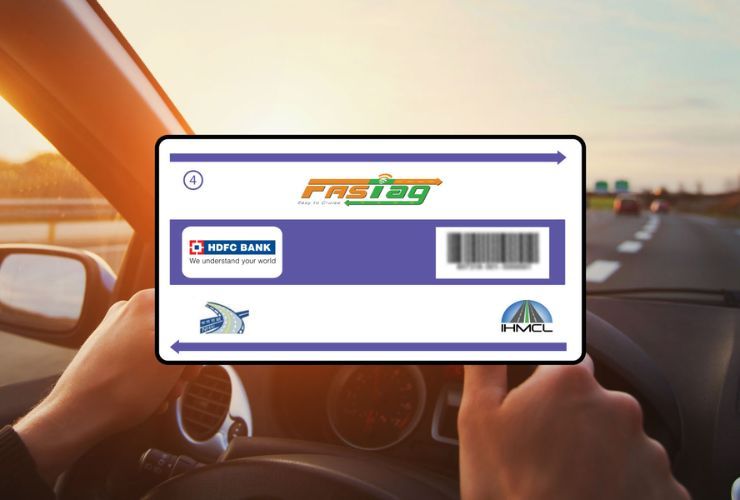
NHAI data puts this at under one percent of vehicles, but given the volumes on urban highways, even one percent translates to a significant number of daily toll evasion cases.
The Mundka-Bakkarwala stretch is only the second barrierless toll plaza in the country and the first in Delhi. It is meant to be a model for what the highway authority wants to roll out more widely.
The evasion happening here has implications for every future barrierless plaza because the same camera and RFID infrastructure will be used across the network.

For honest FASTag users who keep their plates clean and their tags visible, the system works exactly as advertised: no stopping, automatic deduction, smooth flow.
The burden falls heaviest on them if evaders continue to use the same roads without contributing to maintenance costs, since the highway revenue model depends on near-universal compliance to stay viable.
The fixes available to NHAI are fairly clear. Stricter enforcement of HSRP compliance, heavier penalties for plate tampering, and backend analytics to flag vehicles that repeatedly pass through without a successful deduction are all tools that can be deployed.
The bigger challenge is operational: it requires co-ordination with state traffic police for physical enforcement and a robust back-end system to process violations at scale.
The technology behind barrierless tolling is sound. The problem is that any system relying on passive identification of vehicles, rather than physical barriers that cannot be bypassed without stopping, creates a small but determined window for evasion. Closing that window before the system scales up nationally is the real task ahead.