Will Seize And Scrap End-of-Life Petrol, Diesel Cars Without Prior Notice: Delhi Govt


Delhi has put end-of-life vehicle enforcement back on the front burner. A fresh public notice from the Transport Department says any end-of-life vehicle found plying on the road or parked in a public place can be impounded and sent for scrapping without further notice. The notice repeats the age cut-offs that have been in place for years: diesel vehicles older than 10 years and petrol vehicles older than 15 years. It also flags older emission categories, with the notice referring to BS-III and below vehicles in the end-of-life pool.
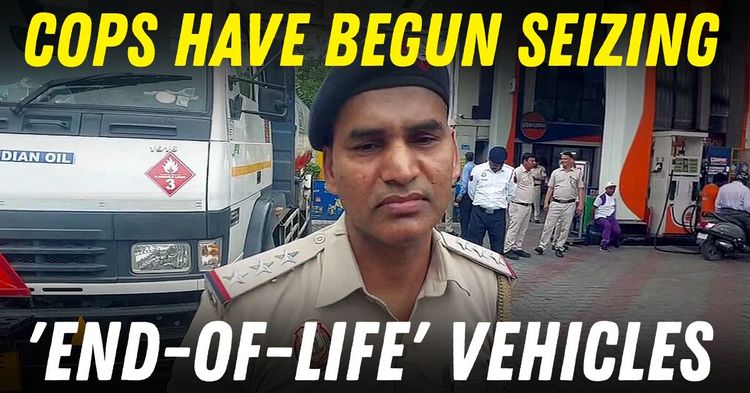
That last bit matters because it signals a tighter net than just “old car, old bike”. But for most owners, the practical takeaway is simpler: if your vehicle crosses the age limit, the city is saying it does not want to see it on a public road, even if it is just standing there.
In the past, many owners took a calculated chance. They avoided long drives, tried not to cross busy checkpoints, and assumed that a vehicle parked outside the house would draw less attention than one running on the road. Enforcement, too, often looked that way. Road checks were the visible part of the campaign, while parked vehicles in residential lanes and crowded markets frequently escaped action.

This notice tries to remove that comfort zone. It treats public parking as part of the same problem as driving. If the vehicle is in a public place, it can be picked up and moved to an authorised scrapping facility.
The notice also spells out the one legal option for people who want to keep the vehicle. Owners are advised to obtain a No Objection Certificate and transfer the vehicle outside the National Capital Region. Without a valid NOC, the vehicle is not supposed to leave Delhi, and if it is found within city limits, it remains liable for seizure. The city is effectively saying: either move it out properly, or be prepared to lose it.

A lot of residents will tell you this news does not feel “new” because the rule has been around for a long time. What felt new was the intensity, which came and went. There were phases when enforcement seemed strict, followed by months when it looked like the city had eased off. Many people assumed it had mostly stopped.
That perception was helped by a messy policy arc. The fuel-denial plan, the ANPR camera push at fuel stations, and the court back-and-forth around whether age alone is a fair yardstick created enough confusion for enforcement to become uneven. When legal orders and compliance systems are in motion, the city tends to turn cautious, if only to avoid having drives challenged later.
Now the department’s wording suggests that caution phase is over. The message is direct: the rule stands, and action will be taken when end-of-life vehicles are found in public spaces.
The official numbers give a sense of why Delhi keeps returning to this topic. Recent reporting cites 22,397 vehicles being impounded and scrapped in 2023 and 39,273 in 2024. Another data point shows 7,789 end-of-life vehicles being impounded since October 1, 2025 under GRAP-linked enforcement.

Those are big numbers in isolation. They are also a reminder of how large the base is. Estimates based on VAHAN data have put the count of end-of-life vehicles in Delhi at around 62 lakh, with roughly 41 lakh being two-wheelers. That figure has been debated in parts of the coverage, but even if the true number is lower, the pool is still massive.
This is where execution gets tricky. Towing and impounding drives need consistency, otherwise the same lanes get targeted repeatedly while others remain untouched. There is also the usual real-world friction: out-of-state registration, disputed age records, owners claiming private-parking status, and the basic question of enforcement capacity across the city every day, not just during a headline-grabbing drive.
Still, the direction of travel is clear. If your diesel vehicle is over 10 years old or your petrol vehicle is over 15, the safe assumption is that being visible in public spaces now carries a real risk of seizure and scrappage.