Plug-In Hybrid Cars Are Coming to India: Say Goodbye To Range Anxiety


Today, if you want to buy a car, you have so many options that you will definitely get confused. In traditional powertrain options, we have petrol, diesel, and CNG cars. However, now we also have electric cars, strong hybrid cars, and the latest plug-in hybrid cars. Now, if you are someone who is confused as to which new type of alternative fuel vehicle you should buy, you have come to the right spot. Today, we will explain to you about electric vs strong hybrid vs plug-in hybrid cars and help you decide which one will be the best for you.

Even though most of you might already be aware of electric cars, we will still help you understand what an electric vehicle actually is. EVs are those cars which do not have any internal combustion engine or transmission. Instead, they are equipped with an electric motor or motors (in case of higher-end all-wheel-drive EVs), which are connected to a large battery pack.
Generally, these battery packs range between 30 to 80 kWh (some are even bigger in ultra-luxury EVs). Now, depending upon the size of the battery pack, the vehicle can have a range between 300 to 500+. It has to be noted that most of the time, the range highlighted by the manufacturer is 20 to 30 percent higher than the actual real-world range.
The main benefit of owning an EV is that the owner can set up a charger at their residence. They can drive the vehicle at a cost of around Rs 1–2 per km, which is very less compared to Rs 5–8 of an ICE vehicle over the span of 5 years. Additionally, EVs also attract a lower GST of 5 percent compared to 28 percent or more in the case of ICE vehicles.

If you are someone who has to drive over 100–120 km every day and has their own residence and can install a charger without any complications, then you should definitely consider buying an EV, as it will be one of the best decisions you will ever make. This is because, with home charging, the cost of owning an EV for a longer duration of time reduces the cost of ownership by a huge margin when compared to ICE vehicles.
However, you will have to compromise a bit on long-distance travels, as you will have to plan the route ahead to make sure that you have enough chargers on your way. Presently, charging infrastructure and the cost of charging, along with the speed of charging, are not ideal if you are always in a hurry. Additionally, battery replacement cost is still a major concern. But if you can adjust on these points, then buying an EV will be the right choice for you.
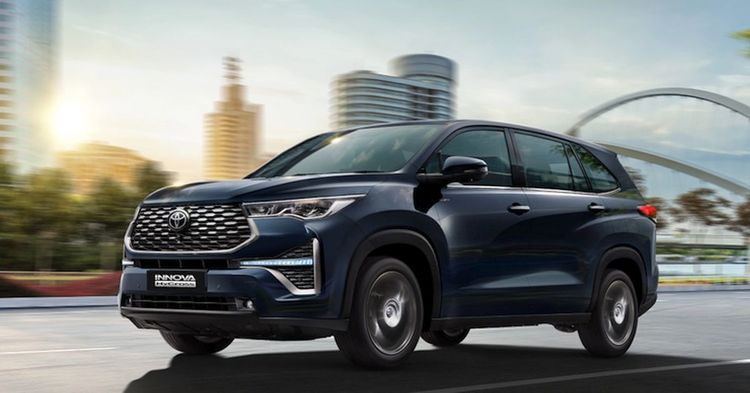
A lot of people over the last few years have become very familiar with strong hybrid cars. In a strong hybrid powertrain-equipped car, the engine and the electric motor both work together to power the wheels. There is also a small battery pack, which is usually 1–2 kWh, and it charges itself using regenerative braking.
Cars equipped with the strong hybrid powertrain automatically switch between full EV mode, hybrid assist, and engine-only mode. It completely depends on the speed and load on the vehicle. In very slow-speed city commutes such as bumper-to-bumper traffic, the vehicle is largely driven using electric power. However, when the driving changes to highways or longer stretches, the internal combustion engine starts.
Currently, strong hybrid vehicles such as Maruti Suzuki Grand Vitara, Toyota Urban Cruiser Hyryder, Toyota Innova Hycross, and others have become very popular in India. These vehicles offer a mileage in the range of 25 to 28 kmpl, which is very impressive. They also do not require any special charging infrastructure, which makes them practical and very easy to use on a day-to-day basis.

If you are someone who lives in the city for most of your time and drives in stop-and-go traffic, then you should definitely consider buying a strong hybrid vehicle. You should also consider strong hybrids if you do not have access to home charging required for electric vehicles and you also go on occasional long road trips. Basically, with a strong hybrid vehicle, you are getting the best of both worlds. What that means is that you are getting the driving feel and conveniences of an electric vehicle as well as an ICE vehicle.

When it comes to the most versatile and the best powertrain option, plug-in hybrid cars cannot be missed. A plug-in hybrid vehicle is the same as a strong hybrid car, but it comes equipped with a much larger battery pack. And the direct benefit of this larger battery pack is the extension offered in the electric-only range. Many plug-in hybrid cars offer an electric-only range of around 100–150 km.
After which, the internal combustion engine starts powering the vehicle, which increases its range by a huge margin. These vehicles, unlike strong hybrid cars which have smaller battery packs and cannot be charged, can be plugged in at charging stations or homes to charge back the battery pack. The only issue with plug-in hybrid cars is that currently there are no affordable plug-in hybrid cars in India. However, most likely, in the coming months, we will be seeing the launch of a number of new plug-in hybrid cars in India.

If you are someone who has access to home charging and travels in the city daily, then you can opt to buy a plug-in hybrid car. A plug-in hybrid will give you the practicality and lower running costs of an EV in city commutes. But when you want to go on a long road trip, you can easily go without worrying about not finding public chargers.