9 Kmpl Mileage Is Becoming The New Normal - We Explain


A few years ago, getting around 12 to 15 kmpl in city driving was considered perfectly normal for most petrol cars. However, in the last few years, things have changed drastically. Today, a number of car owners, especially those driving petrol automatic cars in metro cities, are reporting single-digit mileage figures of around 8 to 10 kmpl in heavy traffic conditions. Due to this, we are facing an important question: whether 9 kmpl has really become the new normal?

If you look at real-world driving conditions in cities today, the answer becomes quite clear. We have seen that the traffic in almost all major cities has worsened significantly over the last few years. Today, roads are more congested than ever, as the number of vehicles has increased dramatically. As a result of this, most daily commutes now involve constant stop-and-go movement, long signal waits, and crawling speeds.
In many cities, the average speed during peak hours often drops below 20 kmph. This means that even a short 10 km commute can take close to an hour to complete. During this time, the car is running continuously but is covering very little distance. And this directly impacts fuel efficiency and brings mileage figures down by a huge margin.

One of the biggest reasons behind low mileage in cities is the fact that cars spend most of their time in lower gears. In heavy traffic, drivers have to constantly shift between first and second gear. They have very little opportunity to engage into higher gears, where engines are more efficient.
Due to this, the engines consume more fuel when they are operating at higher RPMs but low speeds. In traffic, this happens repeatedly. Every time the car moves from a standstill, additional fuel is injected to move it ahead. And when this cycle of acceleration and braking is repeated hundreds of times during a single journey, the fuel consumption increases significantly.

Another major factor is the increasing popularity of automatic gearboxes. It is a known fact that automatic gearbox-equipped petrol cars, especially 1.5-litre turbo or bigger-engined cars, offer unmatched convenience in city driving. However, they are the least efficient in heavy traffic conditions.
Most automatic transmissions, including torque converters, CVTs, and DCTs, are tuned for smoothness. They hold lower gears for longer durations and allow the car to creep forward slowly in traffic. Now, on one hand, this makes driving easier, it also increases fuel consumption. In real-world conditions, it is very common to see petrol automatic cars delivering around 9 to 10 kmpl in peak traffic.

E20 petrol, which is petrol that contains 20 % ethanol is now standard fuel across the country. Ethanol has lower energy content than petrol, which means that it directly results in a mileage drop of 5-7 % in cars designed to run on E20 petrol.
And as for cars that are not designed to run on E20 petrol, the mileage drop is more acute. Many who drive older cars that are not designed to run on E20 petrol have been reporting mileage drops between 10-15 %, which is quite a lot.
To put things into perspective, consider this case: A car designed to run on non-E20 petrol delivering 11 Kmpl in city traffic will only deliver about 9.5 Kmpl on E20 petrol after a 15 % mileage drop due to ethanol's lower energy content.

An idle sitting car in a traffic jam is another reason why mileage drops below 10 kmpl. In city traffic, cars spend a lot of time stationary at signals or stuck in jams with the engine running. And even when the car is not moving, the engine continues to consume fuel. On average, a car can consume close to 0.6 to 1 litre of fuel per hour while idling.
Over the course of a daily commute, this adds up and brings down overall mileage figures. Most drivers do not switch off their engines during long stops. And the main reasons for this are the need for air conditioning and not wanting to switch off music and infotainment systems. In a lot of cars, battery discharge warnings appear if the ignition is kept on without the engine running.
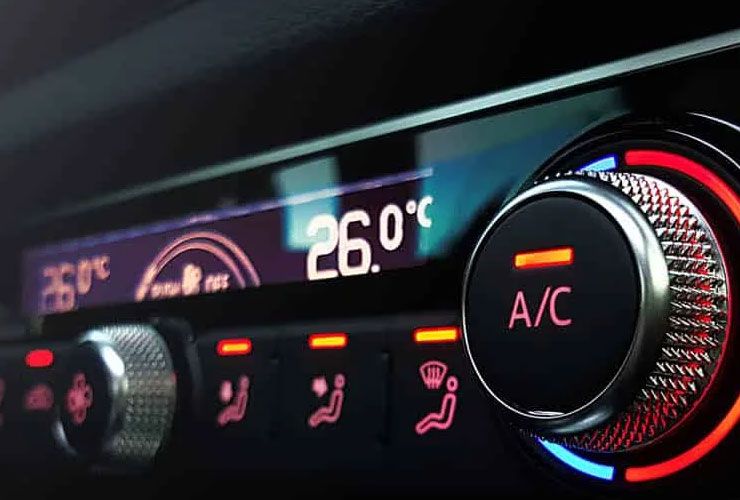
In a country like India, driving without air conditioning is not practical for most of the year. As a result, the AC remains switched on for almost the entire duration of the drive.
The AC compressor, as we all are aware, draws power from the engine, which increases fuel consumption. This effect becomes even more noticeable in slow-moving traffic, where the engine is already under load. Smaller petrol engines, in particular, struggle to maintain both movement and cooling efficiently. As a result, the mileage drops very quickly.

A lot of cars in India are now being offered with a turbo petrol engine, and these engines are designed to offer a balance between performance and efficiency. They are especially designed to offer efficiency at higher speeds. However, in city traffic, turbo engines rarely operate in their optimal range.
The turbocharger needs a certain level of exhaust flow to spool effectively. And that is usually not achieved in slow-moving conditions. As a result, drivers tend to press the accelerator harder to get moving, which leads to higher fuel consumption. Also, frequent acceleration and braking, combined with turbo lag, make these engines less efficient in traffic.

Diesel engines are generally more efficient than petrol engines. This is due to their higher torque and lower RPM operation. As a result, it makes them better suited for handling traffic conditions. However, even diesel cars are not immune to heavy congestion. In moderate traffic, diesel automatics can still deliver around 13 to 15 kmpl.
However, in peak rush hour conditions, even these vehicles see a significant drop in mileage. Most modern BS6 diesel engines also come with additional emission control systems. And these systems impact efficiency in longer low-speed driving conditions.

Driving style plays another one of the most crucial roles in fuel efficiency. If the driver aggressively accelerates or brakes suddenly very frequently, the mileage drops very fast. On the other hand, smoother driving with gradual acceleration and better traffic awareness can improve mileage by 1 to 2 kmpl even in heavy traffic.

When all these factors are combined, which include traffic congestion, automatic transmissions, turbo petrol engines, constant AC usage, and idling, it becomes very clear why mileage figures have dropped. In today's driving conditions, 9 to 10 kmpl for petrol automatic cars in peak traffic is no longer unusual.

The above-mentioned reasons are why electric vehicles and strong hybrids are becoming more popular in India. When it comes to efficiency, electric motors in EVs are far more efficient in stop-and-go traffic. They do not consume energy while idling and can recover energy through regenerative braking.

Additionally, when we talk about strong hybrid cars as alternatives, they also run in pure electric mode at low speeds, which makes them highly efficient in city driving. In the coming period, we will be seeing more strong hybrid models that are expected to offer 20 to 25 km of pure electric driving range, which means that many daily commutes can be completed without using any fuel at all. And this makes them the best option for urban traffic conditions.
Featured image courtesy Deepak Negi