Many Automakers Are Dumping The Spare Tyre: Good Move Or Bad Move?


For years, cars in India have been offered with a spare wheel, which a lot of people also call the “stepney.” However, over the last 4–5 years, a shift has been taking place in the automotive industry. A number of major automakers have now stopped offering spare tyres with their cars, and instead they are offering puncture repair kits. Now, whether this is a good move or a bad move, you will find out by the end, so make sure to read it till the last.
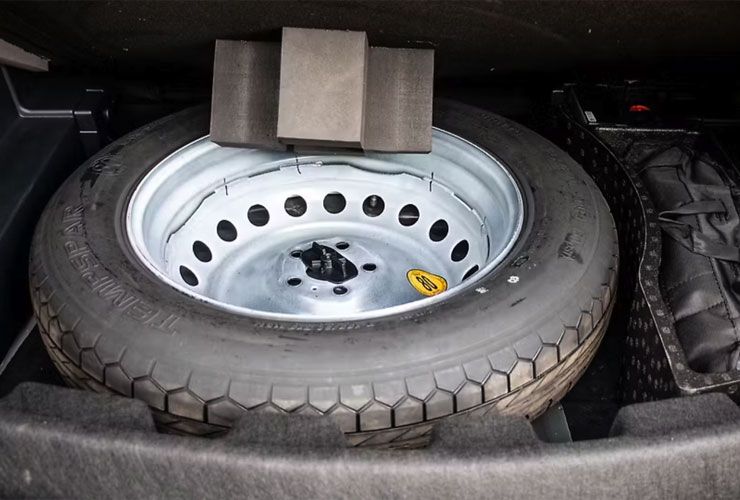
Back in July 2020, the Central Motor Vehicles Rules (CMVR) were amended by the Government of India. It highlighted that from October 1, 2020, passenger cars were no longer required to carry a spare tyre if they had tubeless tyres, a tyre pressure monitoring system, and a tyre puncture repair kit. This move aligned the Indian rules with the ones seen in Europe.

Currently in India, popular electric cars, including Tata Tiago.ev, Punch.ev, MG Comet EV, Windsor EV, and VinFast VF6 and VF7, are some of the electric cars which do not get spare tyres. The main reason is that spare tyres take up underfloor space, and weight reduction from their absence increases the range slightly.

As for the hybrid and ICE vehicles in India which do not get spare tyres, the list includes Maruti Suzuki Grand Vitara (strong hybrid), Victoris (all variants), Fronx Turbo, Toyota Urban Cruiser Hyryder (some variants), Tata Harrier and Safari (base variants), Hyundai Verna (base variant), Venue (base variant), and Alcazar (base variant).
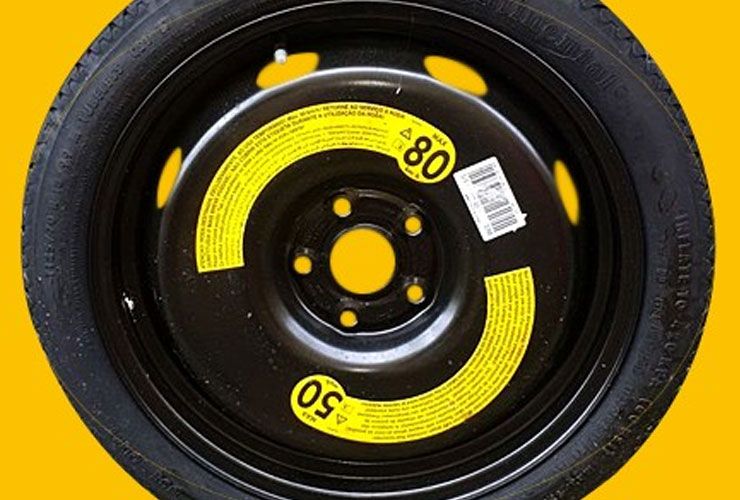
Currently, the alternatives offered by these major automakers include space-saver tyres and puncture repair kits. For those who may not be aware, a space-saver tyre is a smaller, lighter spare wheel, which in most cases is a steel rim with a very narrow tyre painted in a bright colour, generally yellow or orange. This tyre is not meant for permanent use, and there is a speed restriction of around 60–80 kmph.
These spare tyres help automakers save space in the boot, reduce weight, and are much cheaper than a full-size spare. Apart from these, companies are also offering puncture repair kits. These kits come with sealant and other tools, along with a tyre inflator, to make sure that a puncture can be repaired quickly.

Now, coming to the advantages of not having a full-size spare tyre in the vehicle, these include more boot space, lower vehicle weight, and marginally better fuel economy or EV range. As for the automakers, it helps in lowering manufacturing costs and allows easier packaging for batteries. For car users, generally, repair kits are quicker for small punctures and offer a cleaner and simpler solution.

However, just like everything else in this world, there are some disadvantages as well. For instance, puncture repair kits cannot help in fixing sidewall cuts, major damage, and bent rims, all of which can be easily fixed by replacing the damaged tyre with the spare.
Well, on one side, the condition of Indian roads is improving, but we all know that it is still not the best everywhere. There is a mix of expressways and broken rural roads in India, and due to this, there is a higher risk of tyre damage. Additionally, long-distance travel, with night drives on remote highways and limited tyre shops in some regions, is a huge issue and makes a full-size spare tyre a necessity rather than a luxury.

Also, a spare tyre is very necessary for commercial and rural users, as the downtime directly affects their income. Mostly, city-only drivers and other short-distance commuters, along with EV owners with roadside assistance, are the ones who do not require a spare tyre.
So, what our take on this topic is that people who mostly drive around in cities can work without a spare tyre. However, if you are someone who regularly drives on highways and in areas where there are not as many tyre shops, then you should definitely opt for a vehicle with a full-size spare tyre.