Citroen Is India's FASTEST Growing Car Brand


Citroen is one of the recent brands to enter the Indian market. Everyone knows that Citroen, as a brand, didn’t have a great start in the Indian market. Although they had multiple products, the cold response from customers had more to do with the brand’s strategy. It looks like Citroen has learned its lesson and realised what India, as a market, needs. Now that they have made changes, Citroen has become one of India’s fastest-growing car brands.

We’ll explain this growth with the help of sales numbers. In February 2025, Citroen sold a total of 268 cars in the country. A year later, in February 2026, Citroen managed to sell 950 cars. That is 682 more cars than in the same month the previous year. If you compare it year-on-year, Citroen has seen a growth of 254 percent. This is more than any brand currently present in the Indian market.

If you look at the individual numbers, the Citroen C3, which is the entry-level model from the brand, saw a huge bump in sales numbers. In February 2026, Citroen sold 753 units, while last year the numbers for the same model were 110. Similarly, Citroen sold 23 units of the eC3, 99 units of the C3 Aircross, 73 units of the Basalt, and 2 units of their current flagship, the C5 Aircross, in February 2026.
If you are wondering what changed so much that people are slowly starting to buy Citroens in India, then let us explain. As mentioned above, it had more to do with the brand’s attitude than anything else.

As per their initial plan, Citroen launched the most expensive model, the C5 Aircross, first and set customers’ expectations high. They didn’t want to be seen as a budget car brand and wanted to create a premium space for themselves.
However, things changed with their next launch, which was the C3. The C3 was the most affordable model from Citroen, and the brand had said that this was part of their C-Cubed programme, where they would develop highly localised, cost-effective vehicles based on a heavily re-engineered PF1 modular platform.
When the C3 was launched, people realised that the car was very basic and didn’t offer many of the features they expected. It was also not a cheap car by any means, and that pushed buyers away even further.

After the C3, the brand launched the eC3, C3 Aircross, and even the Basalt. In all these models, they followed the same pattern, and customers almost started feeling that Citroen was not taking the Indian market seriously. In the name of cost-effectiveness, they were offering sub-standard products. This, along with the limited dealership network and service centres, meant people were looking at other brands and models.
Citroen probably realised that at this rate they were not going to survive in a highly competitive and price-sensitive market like India. Last year, after considering multiple factors, Citroen finally announced the next phase and called it “Citroen 2.0 – Shift Into The New”. The new strategy focuses on delivering long-term value and aspirational mobility solutions. It also focuses on an upgraded product portfolio, deeper market penetration, and a customer-first approach to elevate ownership experiences across India.
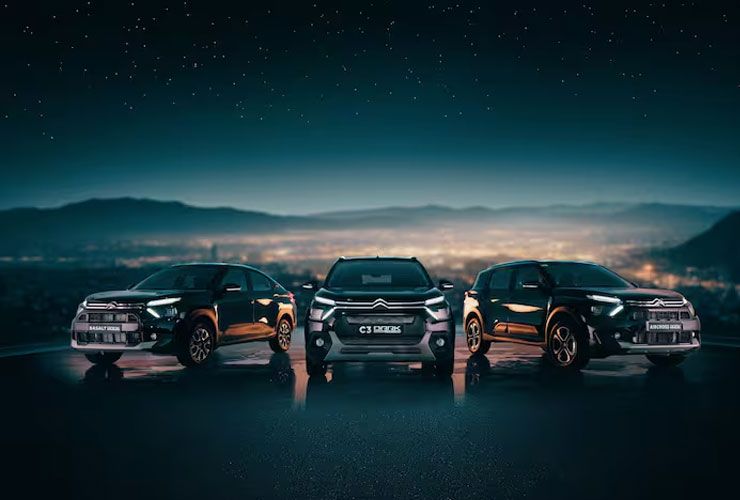
After this strategy came into place, we started seeing changes in the product lineup. Citroen started offering features like touchscreens and many more features even in the lower variants, and they began updating the feature lists to make the cars more value for money. They also ran marketing campaigns and introduced offers to attract customers to their dealerships.
Before this new strategy, Citroen had around 58 outlets in India. After the new strategy came into play, the aim was to reach 150 dealerships by 2025. As per reports, Citroen managed to open 126 dealerships by late 2025.
So, changes to the existing lineup, along with attractive offers and dealership expansion, are what made Citroen one of the fastest-growing car brands in India.