4 Kinds Of Hybrid Cars You'll Soon Be Able To Buy In India


Although electric mobility has been named as the future, the transition to pure EVs in developing countries like ours will take a bit more time than anticipated. As a result, the next best option towards more sustainable and eco-friendly mobility, according to many experts, are hybrids. Currently, there are only two types of hybrid vehicle options in India. However, soon there will be four types of hybrid cars on sale in the country. Now, if you want to know the details of each of these hybrid types, then you have come to the right spot.

The first, most affordable, and most popular type of hybrid cars available in India are the mild hybrids. Most mild hybrid cars use a petrol engine, a small electric motor or a generator, and a small battery, generally a 12V or a 48V unit. It has to be noted that the electric motor in a mild hybrid vehicle cannot drive the car independently.

Instead, its main job is to assist the engine during acceleration, start-stop operations, and regenerative braking. They also help the engine in reducing load at low speeds. These systems are usually integrated as Integrated Starter Generator (ISG) and Belt Starter Generator (BSG). As mentioned, the wheels are always powered by the engine.
Now coming to the part why mild hybrid vehicles got a bad name in India. Around 2015–2017, the Indian government introduced FAME incentives and excise duty benefits for hybrid vehicles. As a result, instead of introducing true hybrid systems, many brands introduced basic mild hybrids which delivered minimal fuel efficiency gains, no electric-only driving, and had tiny batteries.
As a result, the government also later noted that mild hybrids did not deliver any meaningful electrification benefits and manufacturers were only taking advantage of tax incentives. Due to this, the incentives were stopped, and mild hybrids lost government benefits. Also, mild hybrid technology gained a poor reputation among buyers.
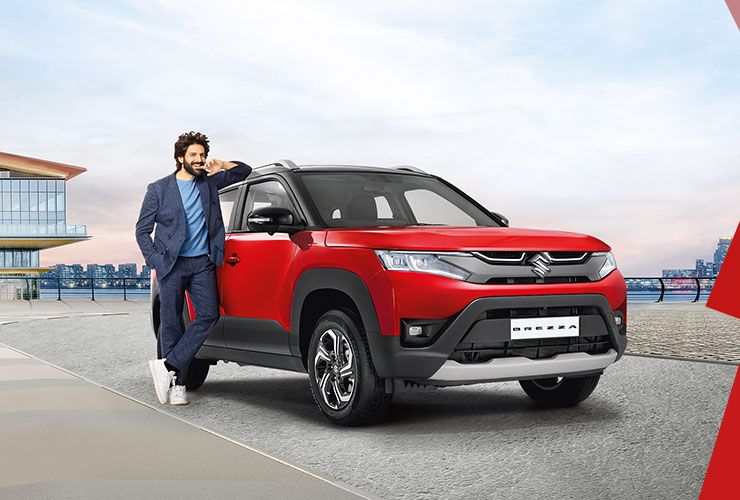
Examples of mild hybrid cars include Maruti Suzuki Brezza, which uses an SHVS mild hybrid system. Its powertrain includes a 1.5-litre petrol engine with a 12V lithium-ion battery and belt starter generator. The main benefit of its mild hybrid system is that it offers torque assist, regenerative braking, and idle start-stop.

Another example of a mild hybrid vehicle is the Maruti Suzuki Grand Vitara's mild hybrid variant. This vehicle uses Maruti Suzuki’s Smart Hybrid system, which includes a 1.5-litre K15C engine with ISG and a lithium-ion battery. The major benefit of this vehicle is a slight improvement in efficiency, and it also does not provide any electrification benefits of driving.

Now coming to the second type of hybrid cars available in India, the strong hybrids. A strong hybrid vehicle includes a petrol engine, one or two electric motors, a high-capacity battery, and a dedicated hybrid transmission. And unlike mild hybrids, the car can run purely on electric power, and the engine and motor both drive the wheels.
It also offers regenerative braking which charges the battery, and the engine can switch off completely in traffic, helping in improving fuel efficiency. The strong hybrid system is also referred to as self-charging hybrid technology because the battery charges automatically during driving.
In India, strong hybrids make a lot of sense because traffic allows frequent EV mode driving, and also the regenerative braking works well in cities. The main benefit is that it does not require a charging infrastructure, which is the main requirement of pure electric vehicles, and lastly the fuel economy of strong hybrids can reach 25–28 kmpl (depending upon the vehicle).
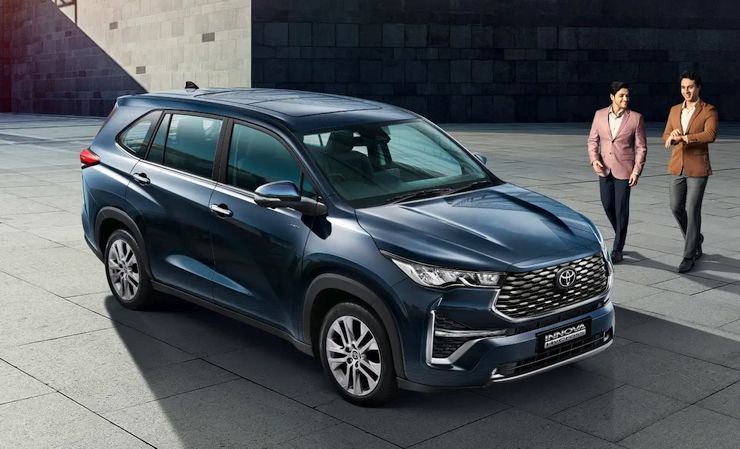
The prime examples of strong hybrid vehicles in India include the Toyota Innova Hycross and the Toyota Urban Cruiser Hyryder. The former gets a 2.0-litre petrol engine which comes with an electric motor and a nickel-metal hydride battery. This powertrain makes 184 bhp and offers high fuel efficiency around 23.24 kmpl (it is a lot as the Innova Hycross is a very large vehicle).

As for the Toyota Urban Cruiser Hyryder, which is based on the Maruti Suzuki Grand Vitara’s strong hybrid version, it gets a 1.5-litre, three-cylinder Atkinson cycle petrol engine with a 0.76 kWh lithium-ion battery and an electric motor. Combined, it makes 116 bhp and gets an e-Drive CVT gearbox and offers a mileage of around 27–28 kmpl.

Next up in the line is the revolutionary series hybrid system. In this system, an electric motor drives the wheels, meanwhile the petrol engine never directly powers the wheels. Instead, the engine only works purely as a generator, and it generates electricity for the battery and electric motors.
In this, the car behaves almost like a fully electric vehicle with a built-in generator. The main benefits of a series hybrid vehicle include a smooth EV-like driving experience, instant torque, and the engine always runs at optimal efficiency.

The first series hybrid vehicle coming to India is the Maruti Suzuki Fronx hybrid. The crossover SUV from the company will be using the 1.2-litre Z12E, three-cylinder petrol engine as a generator, and it will only be used to generate electricity for the battery pack. The vehicle will be powered by the electric motor, and it has been reported that it could provide a fuel efficiency of 35 kmpl.
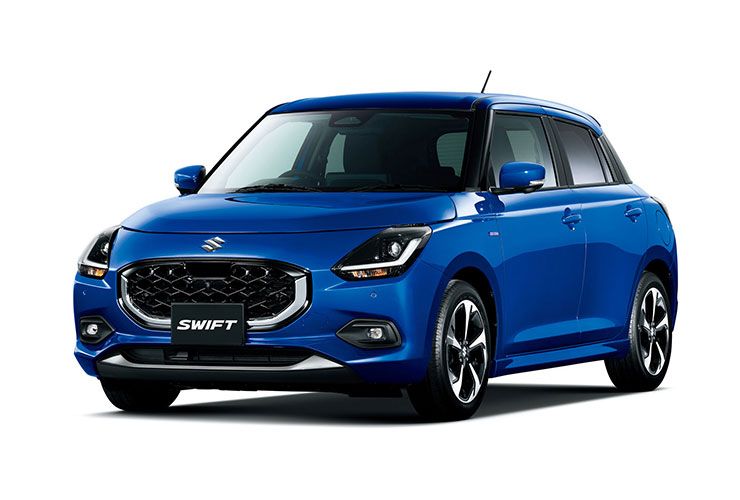
Later in the future, other cars such as the current generation Maruti Suzuki Swift and Dzire, which also use the 1.2-litre Z12E engine, will also be getting series hybrid powertrains.

Last on this list are plug-in hybrid vehicles. The plug-in hybrid system, which those who may not be aware of combines hybrid technology with EV charging capability. A plug-in hybrid vehicle includes a petrol engine, a large battery pack, single or dual electric motors, and an external charging port.
The key difference is that the battery can be charged from a wall socket or charger. This particular feasibility is not available in both strong hybrids and series hybrids. Most of the plug-in hybrid vehicles can be driven around 50–120 km purely on electricity. This means many owners could do their daily commuting without using petrol at all.

As for the upcoming plug-in hybrid vehicles in India, the first vehicle would be the JSW Motors Jetour T2 plug-in hybrid-based SUV. This vehicle is expected to get a 1.5-litre turbo petrol engine with dual electric motors, a dedicated hybrid transmission, and intelligent AWD capability and will offer a pure electric range of 139 km.

Next up will be another plug-in hybrid from the JSW Group, but it will be launched by JSW MG Motor India. This vehicle will be based on the Wuling Starlight 560 and might be named the MG 520. It will get a 1.5-litre petrol engine which will be combined with a front-mounted electric motor and a 20.5 kWh battery pack and offer a range of 100 km in pure EV mode.