Karnataka Govt Goes To Supreme Court To Get Bike Taxis BANNED


The Karnataka government has decided to appeal in the Supreme Court against a January 2026 High Court order that cleared the way for bike taxi services to resume fully in the state. Chief Minister Siddaramaiah has approved the decision, and the transport department, which falls under minister Ramalinga Reddy, had until April 23 to file the appeal. The government has confirmed it is going ahead.
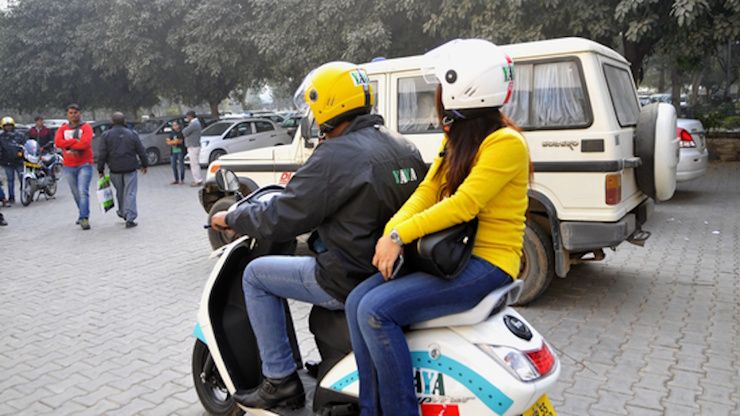
The state's core argument at the Supreme Court is that no regulatory framework currently exists under the Motor Vehicles Act to govern bike taxi operations. Without rules in place, the government contends, it cannot permit the service to run. That is the position they will argue before the apex court.
It sits at the intersection of urban mobility, platform economics, state regulation, and local political pressure. In a city like Bengaluru, where congestion is routine and trip times can balloon over short distances, bike taxis are not a niche service. They are part of how many people solve the last-mile problem every day.
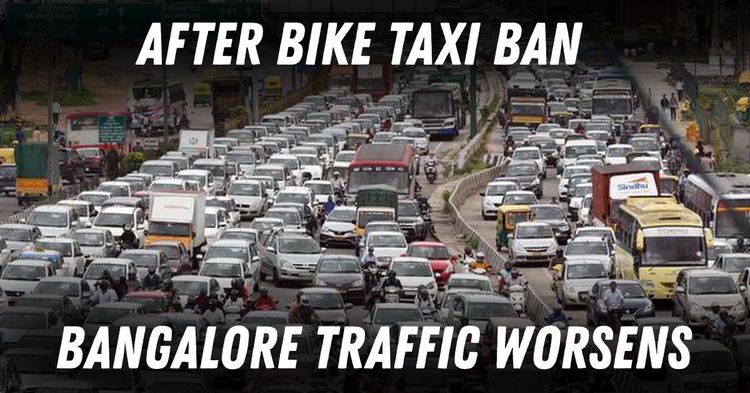
If the Supreme Court sides with the state, the judgment may strengthen the argument that bike taxi operations require express state-level rulemaking before they can function legally. If the court sides with the operators, it could create a much wider precedent around how app-based transport services are interpreted under existing law.
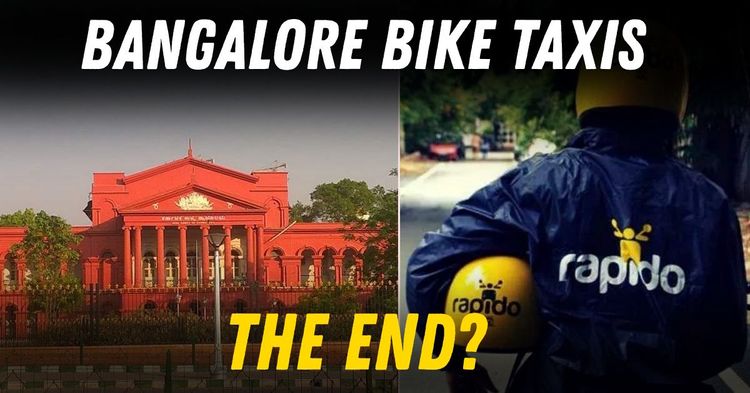
The history of this dispute is a series of reversals. In March 2024, Karnataka banned bike taxi services outright, citing the failure of Ola, Uber, and Rapido to operate with electric two-wheelers as required by the state's policy.
The operators petitioned the Karnataka High Court. A single-judge bench sided with the government's basic position in April 2025, ruling that bike taxi services could not resume until the state had framed proper regulations under the Motor Vehicles Act.
The operators appealed that order before a division bench. On January 23, 2026, a division bench comprising Chief Justice Vibhu Bakhru and Justice C M Joshi overturned the single-judge ruling and allowed the bike taxi services to resume. The state government is now taking that division bench order to the Supreme Court.
That sequence shows how unsettled the legal interpretation still is. A single-judge bench and a division bench have already read the issue differently. That alone increases the significance of the Supreme Court stage, because the final ruling will likely become the clearest reference point for future bike taxi disputes.

The commercial stakes are significant and split along predictable lines. Auto-rickshaw unions are strongly opposed to bike taxis and have been lobbying the state government actively. For every regular commuter who uses a bike taxi for last-mile connectivity in a congested city like Bengaluru, an auto operator loses a potential fare. The unions have historically had considerable influence with the state government and their opposition is acknowledged openly in the government's decision-making.
Ola, Uber, and Rapido run the three largest bike taxi fleets in the city. These platforms argue that bike taxis serve a genuinely different use case from autos: shorter distances, heavier traffic corridors, and price-sensitive daily commuters who need a faster and cheaper option than an auto or a cab. Rapido in particular has built its entire core business model on bike taxis across multiple cities and has a direct commercial stake in the outcome.
The Supreme Court will now decide whether the High Court's interpretation of the Motor Vehicles Act and the right of operators to run the service is correct, or whether the state government's position that no service can operate without express regulations is the legally sound one. Until that ruling comes, bike taxis can technically operate under the High Court order, but the legal uncertainty makes fleet expansion and investment difficult for the platforms.
That uncertainty has its own economic cost. A platform is unlikely to invest aggressively in rider onboarding, incentives, or fleet growth if the legal basis for operations may be overturned. Riders too may hesitate to depend fully on a service that could face disruption again. For commuters, that means the service may remain available in theory but unstable in practice.