Three New Maruti Suzuki MPVs Coming Soon


Maruti Suzuki for decades has been the best-selling car brand in India. A lot of its credit goes to the MPVs or 7-seaters that it has been offering over the years. Now, to make sure that the momentum of MPV sales remains the same, the company is gearing up for the launch of three new models in India. Of these, two will be ICE models and one will be an EV. So without any delay, here are the details of these upcoming 7-seaters from Maruti Suzuki India Limited.

The first vehicle on this list is internally codenamed YMC electric MPV. This new 7-seater will become Maruti’s second electric vehicle after the e Vitara. What will make it interesting is that it will be sharing a lot of its powertrain and platform components with the e Vitara.
The YMC will be based on the same dedicated skateboard Heartect-e platform as the e Vitara, which has been designed by Maruti Suzuki along with Toyota. This platform will help the YMC electric MPV to boast a completely flat floor and much better cabin space when compared to traditional ICE-based MPVs.
In the Maruti Suzuki lineup, the YMC electric MPV will be positioned above the XL6. It will target buyers looking for a modern electric MPV with excellent practicality and comfort. As per the reports, the company aims to provide this MPV with “couch-like comfort.”
The YMC MPV is expected to feature a rear-wheel-drive layout and, in terms of battery pack options, it is expected to get two options. The smaller one will be a 49 kWh battery pack, and it is expected to offer a range of around 440 km. Meanwhile, the larger one will be a 61 kWh battery pack that will help it in delivering a claimed range of up to 543 km on a single charge.
As for the features, the Maruti Suzuki electric MPV is expected to come loaded. We can expect dual screens for the touchscreen infotainment system and digital instrument gauge cluster, a 360-degree camera, Level 2 ADAS, a wireless charger, ventilated seats, powered seats, connected car technology, and a panoramic or fixed glass roof.
It has been reported that the production of the YMC will take place at Suzuki Motor Gujarat’s Hansalpur facility, which currently manufactures the eVitara. Maruti Suzuki is expecting to produce 50,000 units of this MPV annually. As for the launch, the YMC is expected to launch around September of this year. Pricing is expected to be around Rs 22 lakh, and it will directly rival the Kia Carens Clavis EV, BYD eMax7, and the recently launched VinFast VF MPV 7.
The biggest advantages for the YMC will be its dedicated EV platform, spacious cabin, and Maruti’s massive after-sales network. Currently, the company has over 4,000 service centres across India. Charging infrastructure outside major cities and the high expected pricing are the only two downsides for the upcoming Maruti Suzuki YMC 7-seater electric MPV.

Next on the list is the facelifted iteration of the Maruti Suzuki Ertiga. Currently, the Ertiga is one of India’s highest-selling MPVs by a massive margin. Even today, the Ertiga regularly clocks over 20,000 monthly sales and has a total MPV market share of 37.5 percent.
The current generation Ertiga was launched back in 2018, and even though it has received some updates, it is now due for a major facelift. In the last 2025 model year update, Maruti Suzuki increased its overall length by 40 mm, out of which most of this additional space was used to improve third-row legroom.
Now though, the new facelift of the Ertiga is not expected to grow in terms of size. It is expected to include a number of other updates. These will include new LED headlamps, LED DRLs, LED fog lamps, a redesigned front grille, and connected LED tail lamps. It is also likely to get newly designed 16-inch alloy wheels.
On the inside, the Ertiga facelift is expected to receive major feature upgrades as well. It could get a larger touchscreen infotainment system along with wireless Android Auto and Apple CarPlay connectivity. Features like wireless charging, ventilated seats, an electric sunroof, ambient lighting, and even a 360-degree camera are also expected on the higher variants.

Mechanically, the Ertiga facelift is expected to continue with the same 1.5-litre K15C naturally aspirated petrol engine. This motor is capable of producing around 103 PS and 137 Nm. Transmission options will also remain the same: a 5-speed manual and a 6-speed torque converter automatic. The CNG variant will also continue because it is very popular amongst commercial and fleet operators.
One major update which we could be seeing will be the introduction of Maruti’s underbody-mounted CNG tank technology. We have already seen it on the Victoris CNG. This upgrade will help in freeing up boot space, which is currently one of the biggest issues of the Ertiga CNG.
The launch of the Ertiga facelift is expected to take place towards the end of 2026 or early 2027. As for the pricing, it will most likely increase by around Rs 20,000 to Rs 30,000 over the current model. As a result, the new Ertiga facelift could be priced between Rs 8.8 lakh and Rs 12.94 lakh.
Coming to the strengths of the Ertiga, it will continue to be its unbeatable price-to-space ratio, low running costs, and Maruti’s unmatched service network. As for the downsides, apart from the interior fit and finish and quality, nothing much about the Ertiga can be criticized.

Last on this list is the Maruti Suzuki Invicto facelift. Once again, it will continue to serve as the company’s flagship model in India. The Invicto is basically a rebadged version of the Toyota Innova Hycross. The Innova Hycross was launched in 2022, and Toyota usually introduces midlife updates after around four to five years.
Due to this, the facelifted Hycross is expected to arrive around late 2026 or early 2027. As a result of which, we will be seeing an update coming to the Invicto as well. Exterior changes are expected to remain very subtle. We will likely see revised bumpers, an updated grille design, and minor styling tweaks.
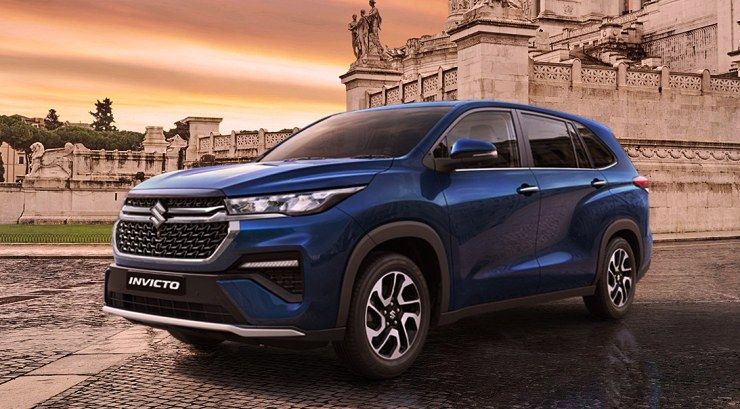
It is believed that the major changes will be on the inside. The facelifted Invicto could come equipped with a larger touchscreen infotainment system along with a fully digital instrument cluster. There is also a strong possibility that Maruti may finally add some premium features such as ADAS, a JBL premium sound system, and ottoman seats.
Mechanically, the Invicto is expected to continue with the same 2.0-litre strong hybrid powertrain which produces 184 bhp. One of the biggest highlights of this powertrain is its mileage figure of 23.24 kmpl, which is extremely impressive for such a large MPV.
The facelifted Invicto is expected to launch around late 2026 or early 2027, and its prices are expected to range between Rs 26 lakh and Rs 28 lakh. This MPV will continue to target business owners, chauffeur-driven buyers, and large families looking for a premium hybrid MPV with excellent comfort and efficiency. And with these updates, it will again become a strong contender for Toyota Innova Hycross buyers who have to wait for a very long time to get their deliveries.