Cash Payment Banned From Highway Toll Booths!


Starting April 10, 2026, NHAI will eliminate the dedicated cash lane at toll plazas on national highways. Until now, most toll plazas had one lane reserved for vehicles without FASTag, where the driver could pay in cash and move through. That lane is being shut down. From April 10, every lane at every national highway toll booth is a FASTag lane, and if your tag is not working, not installed, or has insufficient balance, you will pay 1.25 times the standard toll fee.
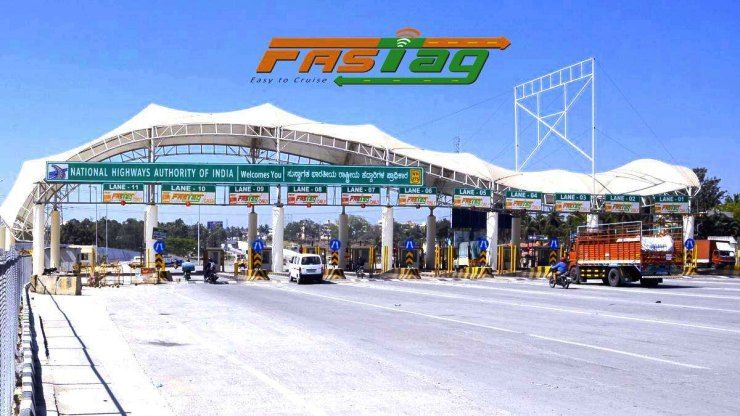
The rule already existed on paper. What changes from April 10 is enforcement. NHAI is directing toll plaza operators to stop accepting cash payments entirely in the dedicated cash lane and to begin applying the 1.25x penalty fee without exception for vehicles that present themselves at a booth without a functioning FASTag. The penalty rate has been in the Motor Vehicles Act since FASTag was made mandatory in February 2021, but the cash lane loophole meant most non-FASTag vehicles simply paid through that route and avoided the surcharge.
This makes the system simpler in one way and stricter in another. Simpler, because every lane now follows the same rule and toll operators no longer need to maintain one separate process for cash users. Stricter, because the vehicle owner can no longer rely on last-minute cash payment as a fallback. The difference matters most for people who drive infrequently on highways and assume they can sort it out at the booth. From April 10, the toll plaza stops being the place where the problem gets solved. It becomes the place where the penalty gets applied.

To understand the impact, here is a concrete example. If the standard toll on a stretch is Rs 80 for a car, a vehicle without a working FASTag will now be charged Rs 100. On a longer highway journey with multiple toll plazas, that surcharge compounds. A trip with six toll plazas where you would normally pay Rs 400 total would now cost Rs 500 without a FASTag. Do that journey twice a week and the annual difference is Rs 5,200 extra versus the cost of simply keeping a FASTag active.
The 25 percent surcharge sounds modest when looked at for one toll stop, but repeated highway use makes it expensive quickly. On a route with 10 toll plazas and a total regular outgo of Rs 900, the same journey becomes Rs 1,125 without a working tag. That is Rs 225 extra on a single run. Even for a monthly highway user making two round trips, that adds up to Rs 5,400 in extra toll payments over a year. For small commercial users, taxis, or intercity operators, the number rises much faster because the penalty is being applied lane by lane, not once per day or once per trip.
The rule applies to all vehicle categories. Two-wheelers are exempt from FASTag requirements and continue to pay standard rates. For cars, SUVs, vans, and light commercial vehicles, the 1.25x rate will be the only option at a toll booth from April 10 if no FASTag is fitted or functioning.
For larger vehicles, the rupee impact is naturally bigger because the base toll itself is higher. A 25 percent surcharge on a Rs 200 toll is Rs 50. On a Rs 500 toll, it is Rs 125. That means the change will be felt most by vehicles that already have high per-plaza toll outgo, including buses and goods carriers. For fleet operators, even a small share of vehicles with inactive or unreadable FASTags can push up monthly operating costs in a visible way.
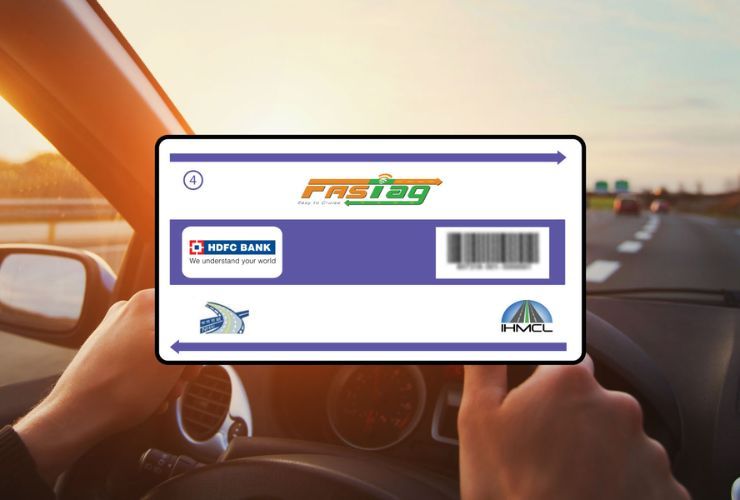
NHAI's clarification covers three specific scenarios beyond simply not having a tag. First, a FASTag that is blacklisted due to the vehicle having more than one active FASTag linked to it will attract the penalty. Each vehicle is permitted only one active FASTag. If duplicate tags exist from old bank accounts or previous transactions that were not deactivated, the system flags the vehicle. Second, a tag with zero or negative balance will not complete a transaction and triggers the 1.25x fee. Third, a tag that is damaged or not readable by the overhead scanner is treated the same as no tag at all.
This is where many users are likely to get caught out. A vehicle can physically have a FASTag on the windscreen and still be treated as non-compliant. If the sticker has faded, peeled, been placed badly, or is linked to an inactive account, the toll operator is not required to treat it as valid. The rule is not about whether a tag exists. It is about whether the toll system can read it and deduct the charge successfully in real time.
The duplicate-tag issue is especially relevant for used cars and for owners who changed banks after 2021. If the old tag was never formally closed and a new one was issued, the vehicle can end up with conflicting records. Since only one active FASTag is allowed per vehicle, clearing that duplication before a highway trip becomes important. This is less a toll-booth issue and more a database issue, but the payment penalty still shows up at the toll lane.

Check your FASTag balance through your bank's app or the NETC portal. Top up if it is running low. If you have switched banks or vehicles in the past two years, verify that the older FASTag is deactivated. Only one active FASTag per vehicle is permitted. If you do not have a FASTag fitted, they are available at any authorised bank branch, most petrol stations, and directly through the NHAI portal. Fitment takes under five minutes.
For buyers of used vehicles, there is one additional check: confirm the FASTag was transferred to your name at the time of purchase or get a new one issued in your name. A FASTag registered in the previous owner's name is a common source of toll plaza issues and, from April 10, will result in the penalty charge being applied even if the tag is physically present on the windscreen.
There is also a simple planning point here. Since NHAI estimates that approximately 97 percent of vehicles on national highways already use FASTag, the change is aimed at the remaining 3 percent that still rely on cash, expired tags, or irregular use. That sounds like a small minority, but on a network handling millions of toll transactions, even 3 percent represents a large number of vehicles. Removing the cash-lane workaround is therefore not a cosmetic change. It is a final push to make the toll system fully digital at the point of collection.
For most regular highway users, the practical takeaway is straightforward. Do not treat FASTag as a sticker. Treat it as an active payment instrument. The tag must be valid, readable, linked correctly, and funded. From April 10, that difference will decide whether you pay the standard toll or a penalty every single time you stop at a national highway toll booth.